Ninja Cat
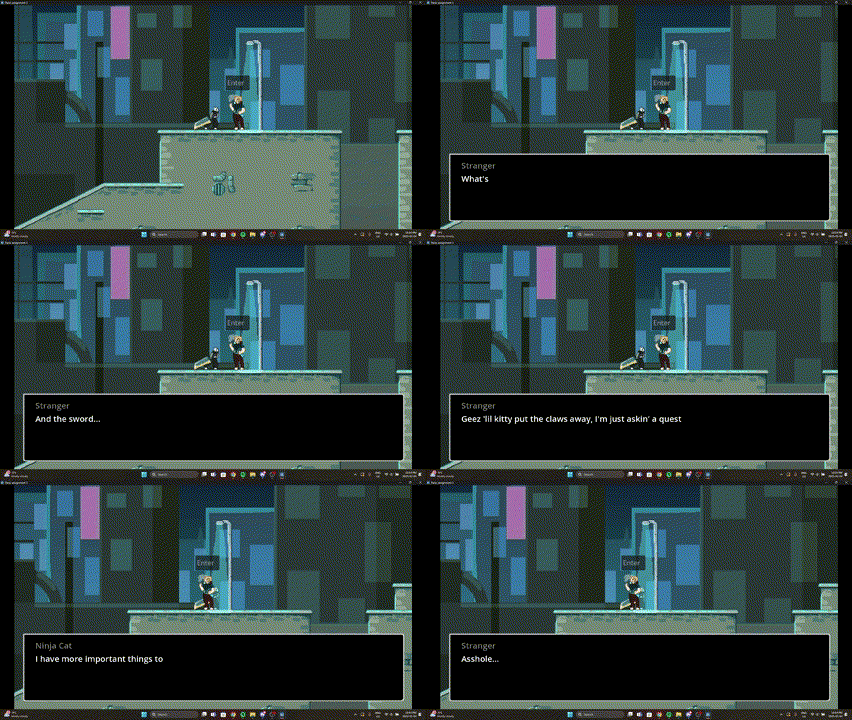
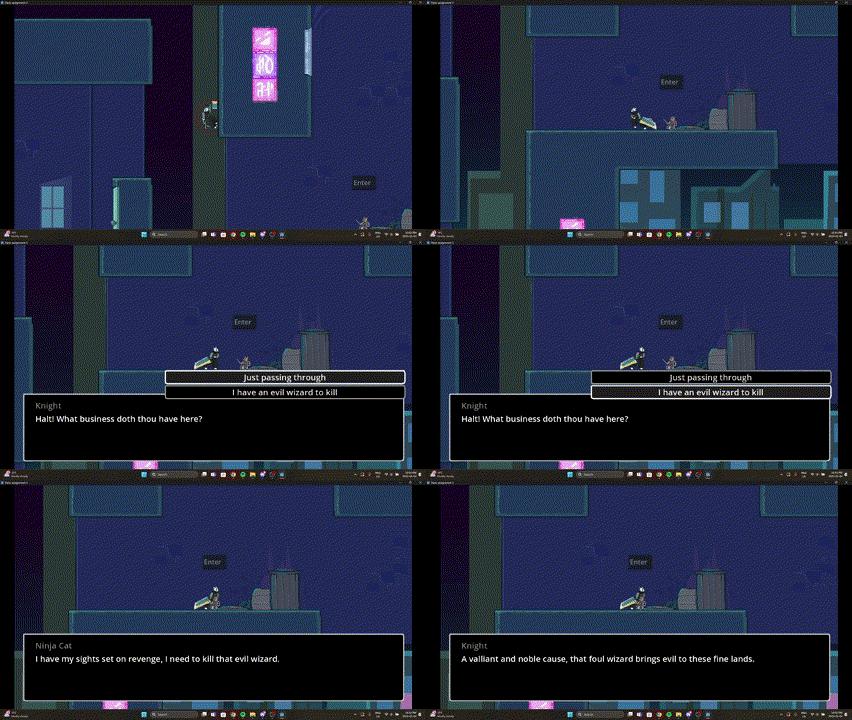
Ninja Cat is a group project created by Team P.A.N.I.C (Pain And Nihilism InCorporated) for our Design and Develop class in my 2nd year at Sheridan College. In the game, you play as Ninja Cat, a ninja-turned cat who is on a quest to kill the evil wizard who trapped him in this furry little feline body. Through his adventures, he meets a few disgruntled wizard apprentices who share his sentiment about the evil wizard, and join his march towards the evil wizard's tower!

Beginning Steps
This project began with 4 months of planning, starting off with a whole lot of documentation. The team made sure to touch on as many things as we could to make sure development went along as smoothly as possible. This included art direction, story and pacing, specific programming requirements, concrete plans to introduce ourselves to Godot and begin implementing simple things, goals and deadlines for milestones, audience research, a plan for a minimum viable product, and post-mortems on design sprints. All this documentation manifested into a team charter and project charter, breaking down step-by-step how we were going to achieve our goals.


Milestones
After we had finished up our main documentation, we moved further into milestone preparation. We used Jira to help create User Stories, which were features or elements we wanted in our game, using the phrase "As a player," and "I want" to guide our design choices. From there, we wasted no time jumping right into Godot, because what better way to learn than to do?
We began with a simple movement system, allowing a player character to move and jump, and do a slow jump, where they are able to control the direction of the second jump they do in air. Once that was completed we added some simple sprites to help us better get a feel on mechanics and how the player felt moving around (was the player character too slow? Too jittery?).
Starting The Story!
At long last, I was able to do what I do best... writing scripts and stories! First, I started my story planning in Miro, allowing me to share my work easily with my groupmates, so they could always tune in to see what I was writing. Each box in the timeline was a different dialogue event, allowing the pacing to be visualized. My team and I could see exactly how many conversations the player would have to go through between side-scroller levels.

Starting The Story!
Each box opens up into the pre-formatted dialogue, which means each tidbit of dialogue could be copy-pasted into our Godot dialogue manager with no need for editing. Our first act of gameplay had 9 individual story beats where character development, story progression, or tutorialization occurred. All of this was separated by 6 different levels.

The Next Steps
Finally, as the second semester of the year came to a close, we finished up a little bit of gameplay, adding a level the player could explore and traverse. The team wrapped up our MVP (Minimum Viable Product) and we sent it off.
We all collectively have a love for this project, and for our team dynamic. Working with Team P.A.N.I.C was one of the most fulfilling experiences I have ever had the pleasure of participating in. The work that everyone put in was heartfelt, and we debated continuing development over the summer, but unfortunately full-time work caught up to us and that plan fell through.
Overall, I am very happy with our end result, and I am excited to share it with you! Thanks for reading 'till the end! (Ninja Cat says thanks too)